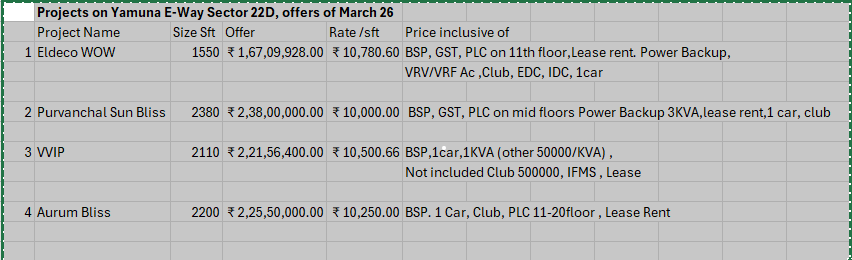
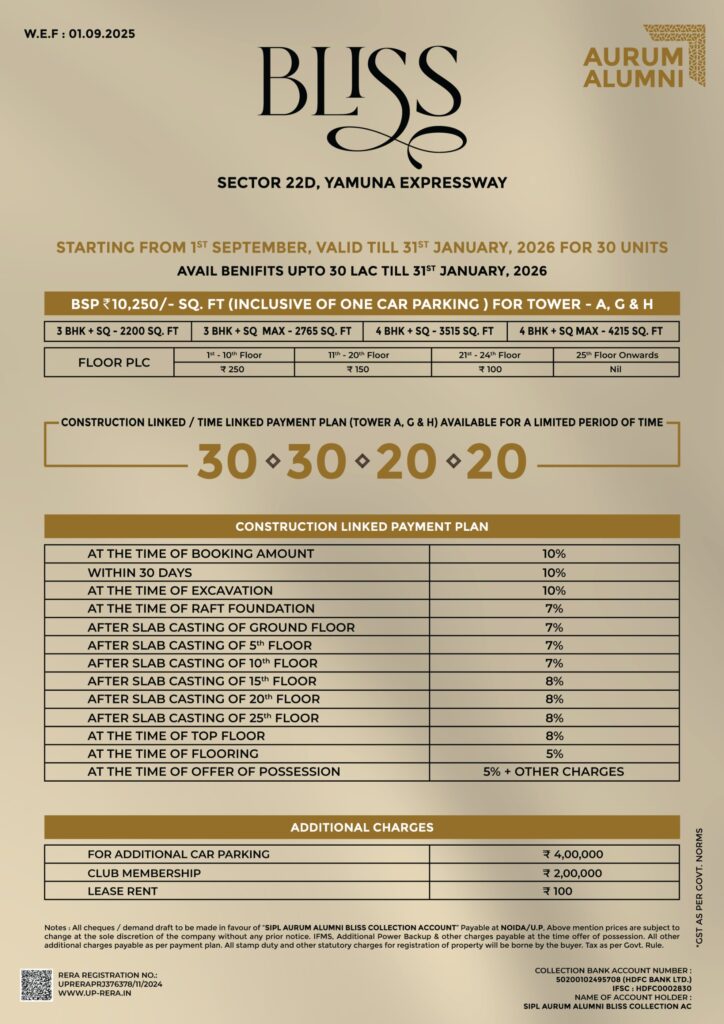
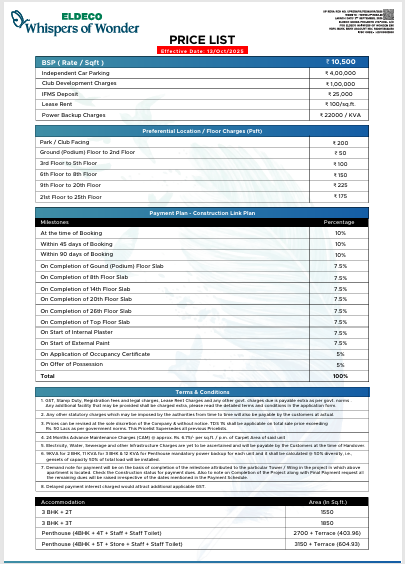
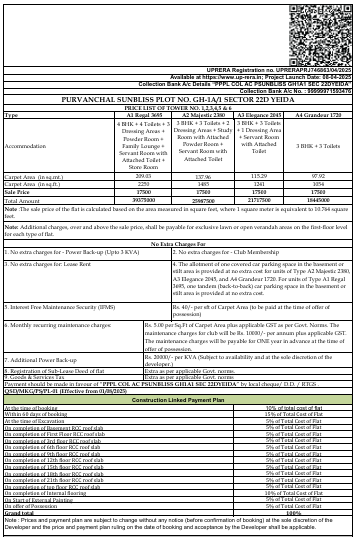
YEIDA Group Housing Bidding Challenges for New Societies
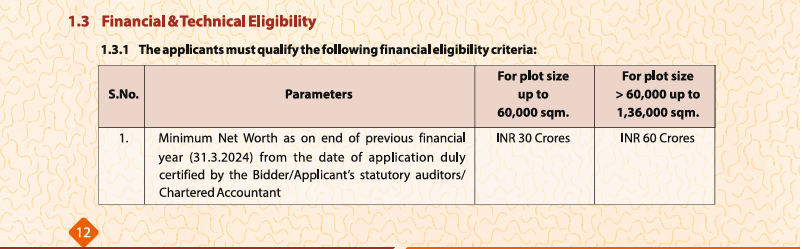
Financial Eligibility: Bidders must demonstrate a high Net Worth (often 20-25% of the total plot cost), which can exceed ₹10–15 Crores for standard plots.
Track Record: Authorities require three years of audited balance sheets and proof of completed construction, which new societies lack.
High Entry Cost: Significant upfront payments are required, including a non-refundable registration fee and a 10% Earnest Money Deposit (EMD).
Strategic Workaround: Societies often overcome these hurdles by forming a Consortium with an established technical partner or developer who meets the financial and experience criteria.
Corporate Housing Proposal: Exclusive Residential Offer for Executives of Dedicated Freight Corridor Corporation of India Ltd. (DFCCIL)
Premium 2BHK Residences at Solitairian City : A Smart Residential Investment & Lifestyle Opportunity @ Jaypee Spotys City, Yamuna Expressway.
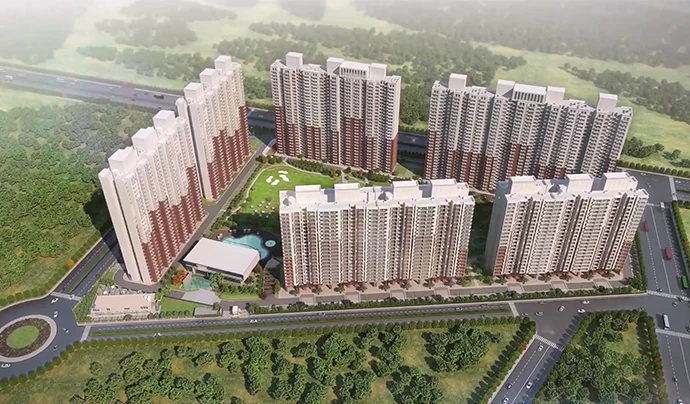
We are pleased to present an exclusive residential opportunity for the executives and officers of Dedicated Freight Corridor Corporation of India Limited (DFCCIL) at the premium residential development Solitairian City, having 100% paid-up land. The project has received Best Project award from Builder Council of India & International Achiever Award in Real Estate Category from Zee Group
This modern high-rise residential society offers spacious 2BHK premium apartments designed for comfortable family living, located within convenient driving distance of Noida.
Strategic Location Advantage • Approximately 20 minutes’ drive from DFCCIL Head Office, Sector 145, Noida • Located at Jaypee Sports City, SDZ-25, Yamuna Expressway, Gautam Budh Nagar—just 309 meters from Buddh International Circuit • Excellent connectivity to: ◦ Eastern Peripheral Expressway ◦ Yamuna Expressway ◦ Upcoming Noida International Airport (set to become operational in early 2026) ◦ Delhi NCR employment hubs This makes Solitairian City an ideal residential choice for working professionals and government executives.
Apartment Options for DFCCIL Executives Premium 2BHK Configurations
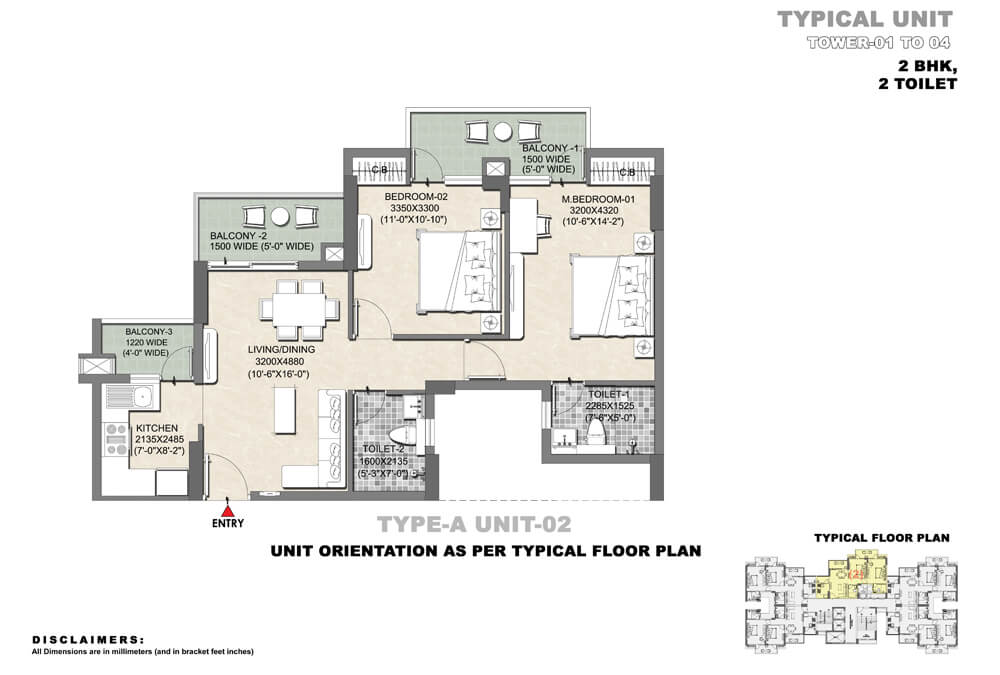
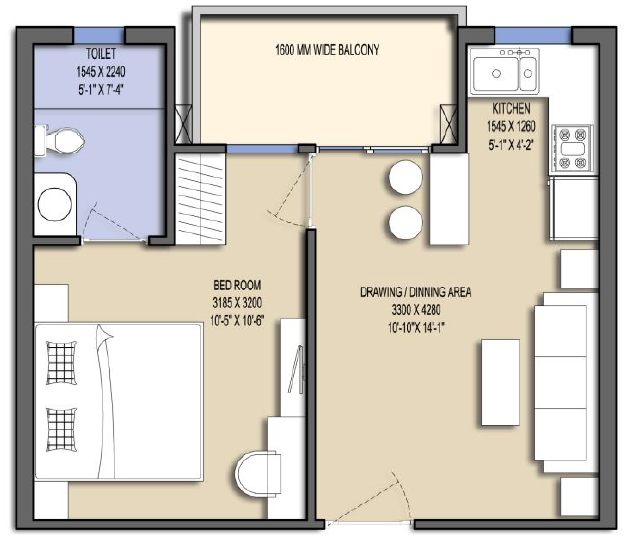
Ideal For 2BHK (Configuration) 1000 Sq. Ft. (Super Area) Young professionals / small families
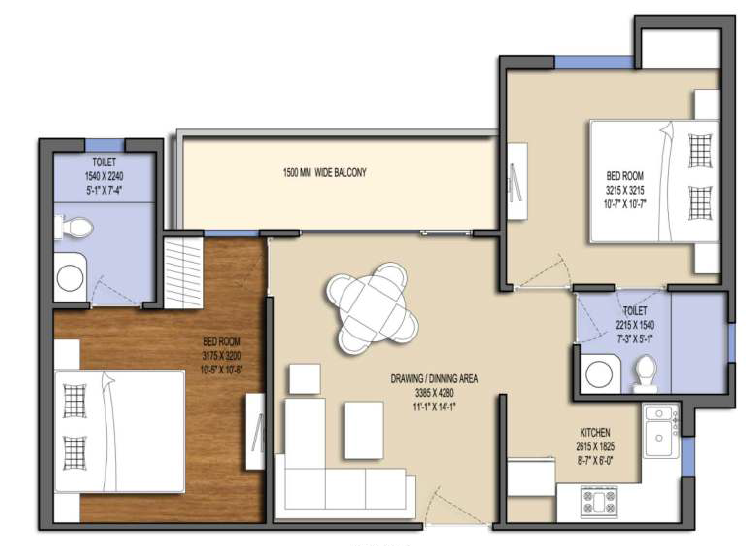
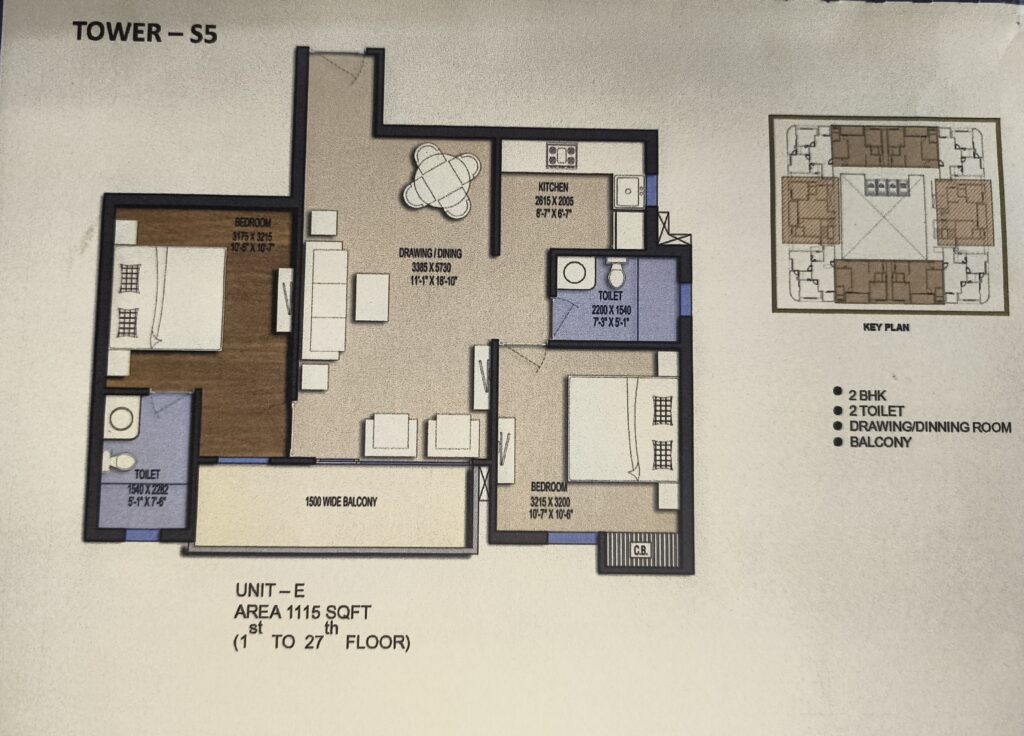
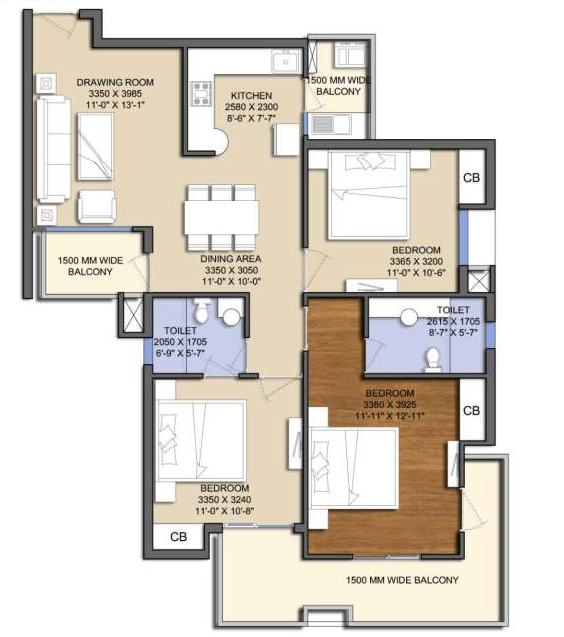
2BHK Large (Configuration) 1115 Sq. Ft. (Super Area) Families seeking extra living space
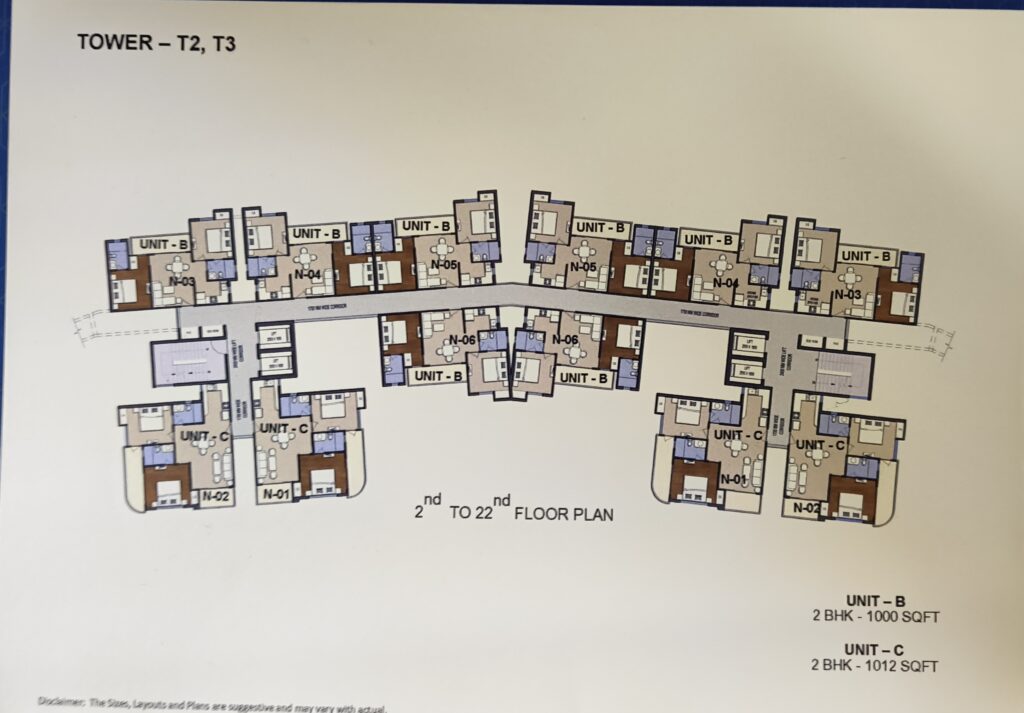
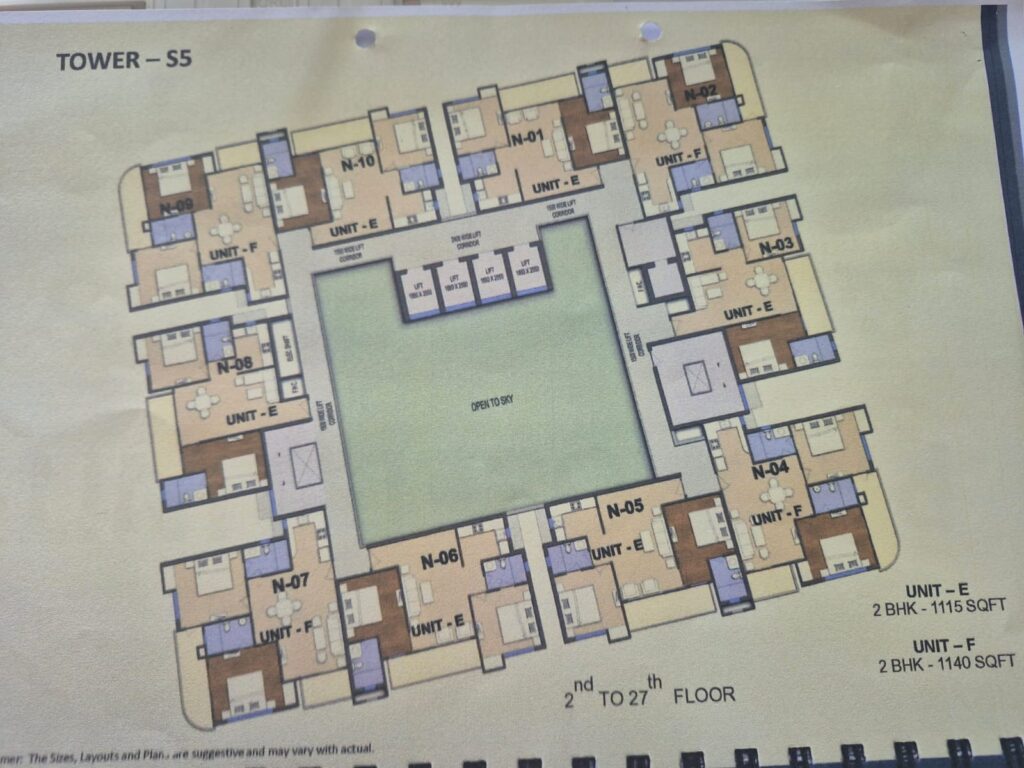
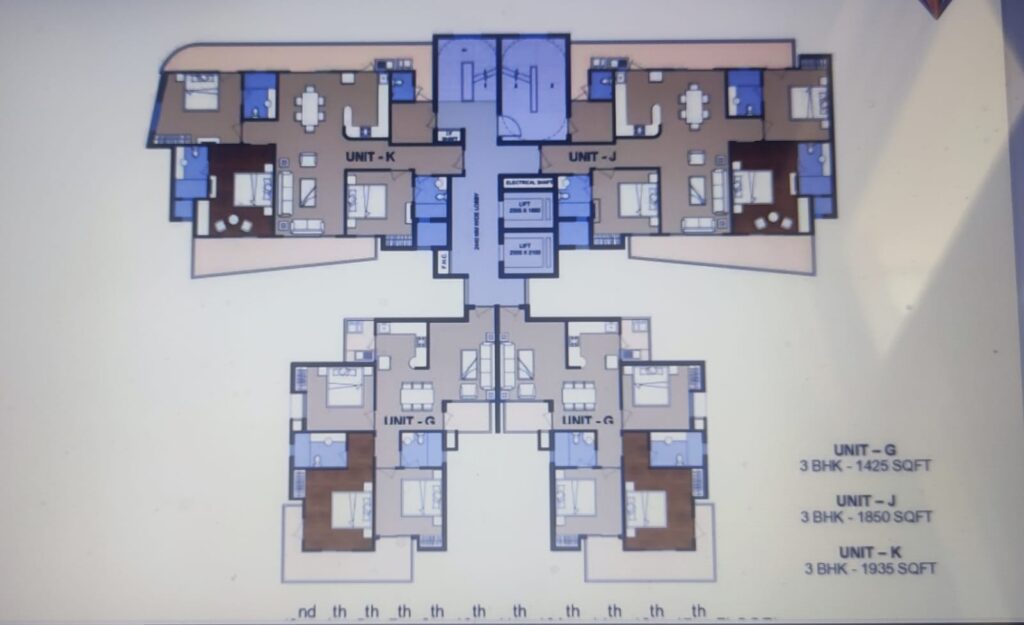
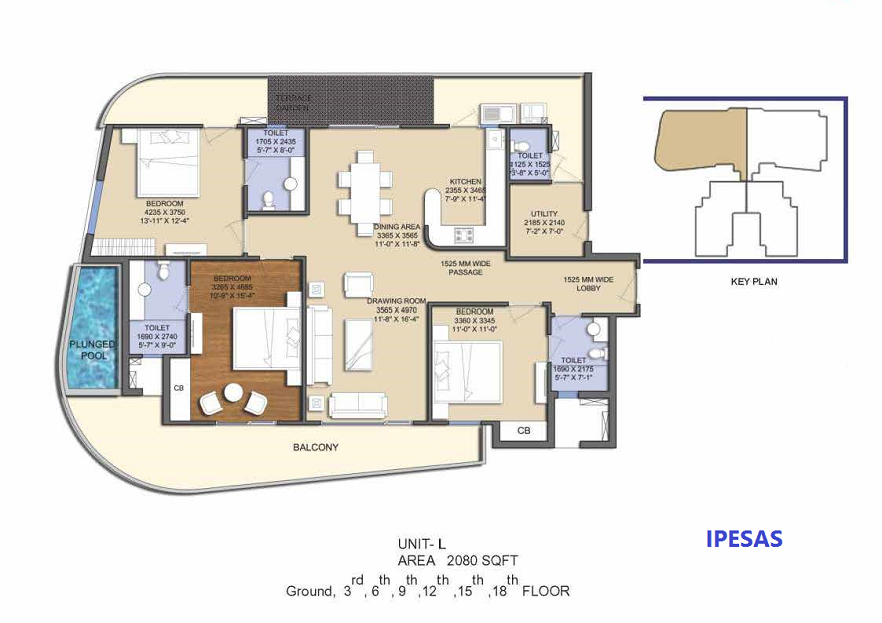
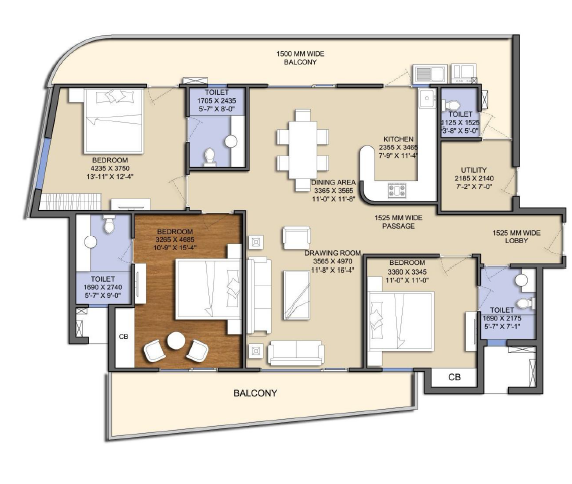
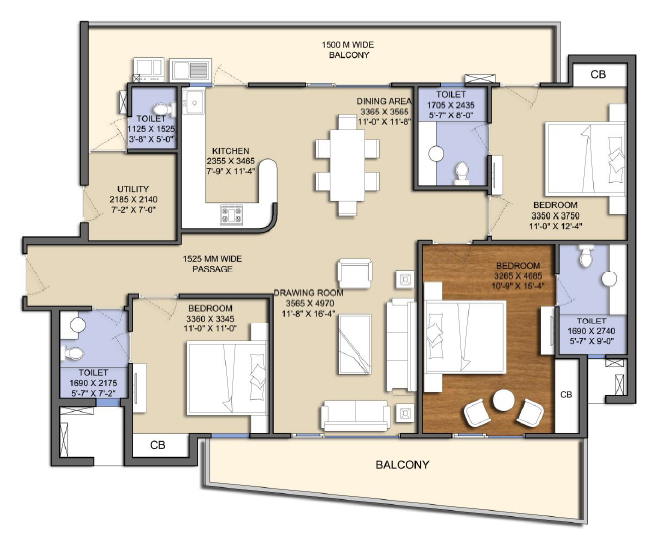
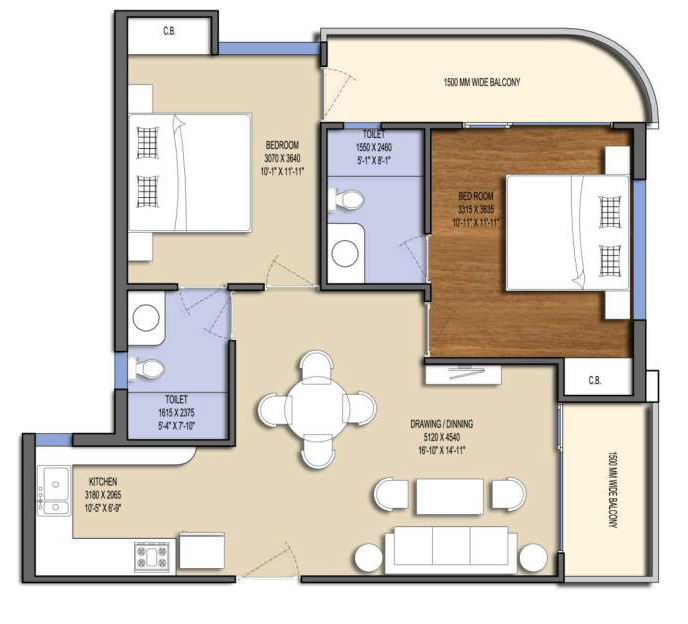
Both layouts are designed to maximize ventilation, natural light, and modern urban living comfort. (Refer to enclosed floor plans for detailed layouts.)
Key Features of the Project • Modern high-rise towers with panoramic balconies • Elegant entrance lobby and secure gated community • Ample natural light and ventilation in all apartments • High-speed elevators and power backup • Landscaped open areas • Dedicated parking facilities • Family-friendly residential environment
The project is designed to offer a comfortable, safe, and premium lifestyle for professionals and their families.
Exclusive Pricing for DFCCIL Executives:
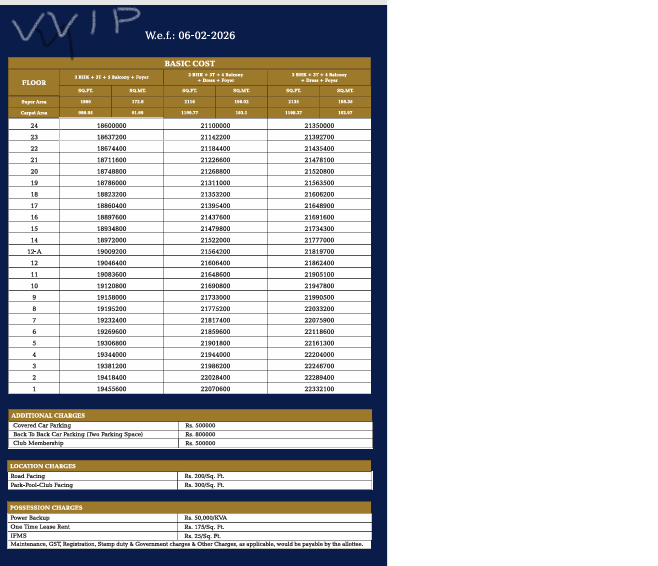
Market prices range from ₹9,500 to ₹10,000 per sq. ft. We are offering at a special rate of ₹8,400 per sq. ft. all inclusive (including 1 Basement Car Parking + Club Membership + 1.5KVA Power Backup and all PLCs). Government levies like GST & Registration Charges will be charged at actuals. The offer is valid only till 11th May, 2026.
Enclosed: Video compilation with actual project photos featuring our members—Mr. Sharad Sachan (former IPS & Inspector General of Police) and Dr. D K Jha (former Director Medical Services, Coal India).
Home Loan Facility Available For the convenience of DFCCIL executives, Home Loan Facility is available only from Canara Bank, subject to standard eligibility and banking norms. This enables buyers to avail: • Competitive interest rates • Flexible repayment options • Smooth loan processing for salaried professionals
Investment Returns and Future Potential on Yamuna Expressway:
The Yamuna Expressway corridor has delivered exceptional returns, with apartment prices surging 2.5X—from ₹3,950 per sq. ft. in 2020 to ₹10,200 per sq. ft. in 2025—driven by infrastructure boom. Plot prices have jumped sixfold to ₹10,500 per sq. ft. in the same period. With the Noida International Airport operational in early 2026, multi-connectivity via Delhi-Mumbai Expressway (including the new 30 km Jewar Airport Link awarded to APCO Infratech), and upcoming metro links (buildable in 1.5 years), this area is poised for 20-30% annual appreciation. Businesses like Bikanervala, Kent RO, and Avery Dennison are already investing, signaling a “Gold Rush” for real estate.
Solitarian City offers near ready-to-move-in potential with applied OC application, ensuring high yields for early investors.
Why This Opportunity is Ideal for DFCCIL Executives
✔ Close proximity to Noida Head Office ✔ Spacious modern apartments suitable for family living ✔ Strong future appreciation due to infrastructure development ✔ Easy home loan availability through nationalized bank ✔ Premium residential community environment
With major developments like the Jewar Airport and enhanced expressway links, this location promises significant value growth.
Invitation for Site Visit Executives of DFCCIL are warmly invited to schedule a personal site visit to experience the project, view sample apartments, and understand the investment potential. For further details, floor plans, pricing, and visit scheduling, please contact:
Saxena V M / Varma R General Secretary/ Treasurer Petroleum, Coal and Banking Executives Welfare Society pcb.net.in WhatsApp/Connect: 9990623304 / 7678480014
Or email: contact@pcb.net in
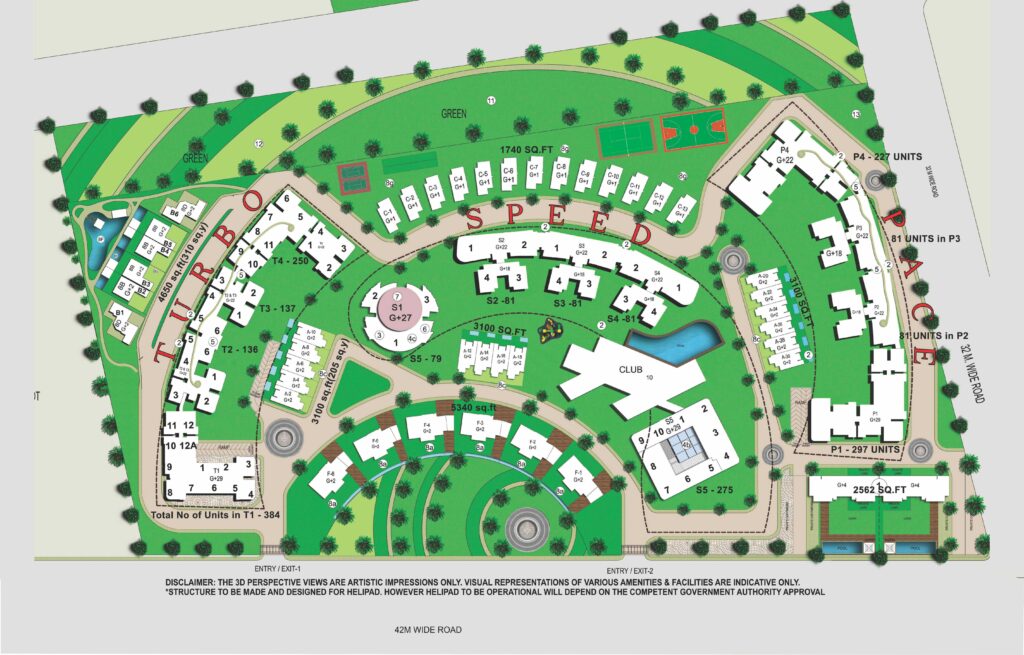
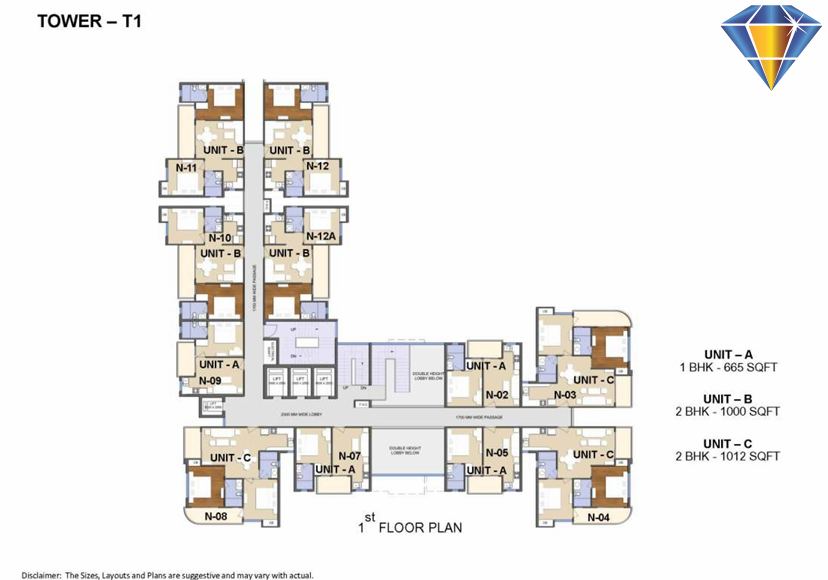
Towers Layout Turbo T2- T3
1000 Sft 2 BHK Carpet Area 631.41 Balcony 76.1sft
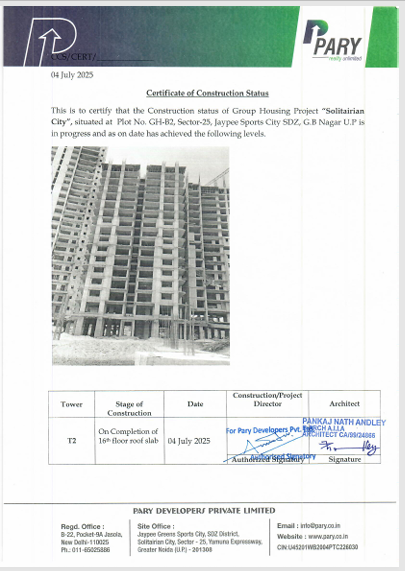
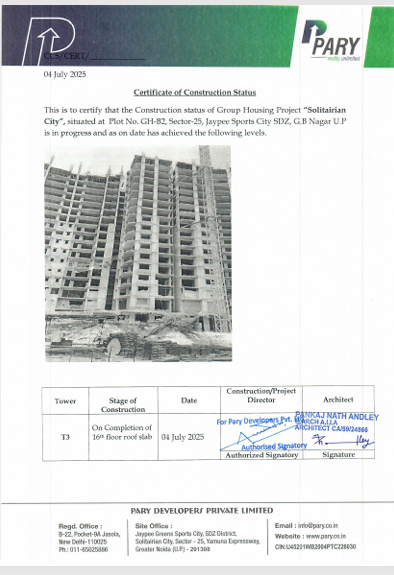
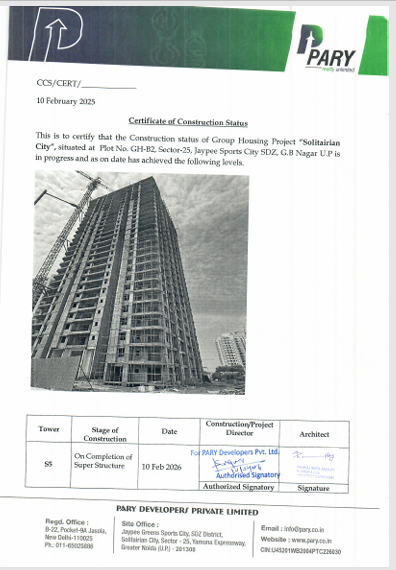
Construction Certificates T2 & T3
Tower Speed S5 Plan, all 29 floors completed. Finishing going on
2 BHK Super area 1115, Carpet 715.48,Balcony76.85 sft
Yamuna Expressway Industrial Development Authority (YEIDA) has approved a 3.58 per cent increase in property prices across its jurisdiction. The decision was taken at the authority’s 89th board meeting, with revised rates set to come into effect from April 1, 2026.
The impact comes to ₹90.20 per sqft for group housing.
Therefore, currently YEIDA (Authority) FAR total land cost come to 2,609/- + Registration charges per square foot. Meaning for 1000sqft flat area, only FAR/ FSI cost will be ₹26,09,000/-
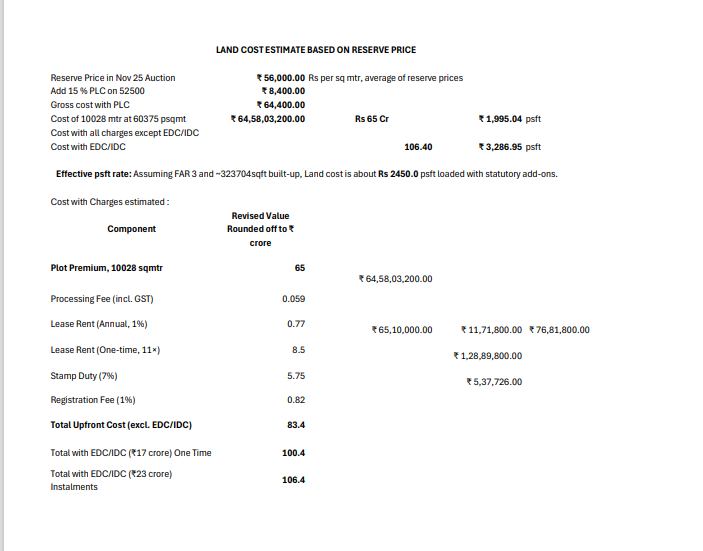
February Auction land price buildup (updated 13.3.26)
The e-auction generated ₹389 crore as the total premium (land cost) for 3 group housing plots totalling ~13 acres (~5.26 lakh sq m or 5,66,280 sq ft plot area) in Sector 22D, Yamuna City, near Noida International Airport.07 YEIDA group housing plots in this area (including recent schemes like those covering Sector 22D) allow a permissible FAR of 3.0. This is standard for these high-density residential group housing auctions, with phased construction requirements (e.g., minimum 30% FAR in the first phase within 3 years). Base calculation from auction premium (land cost only) • Total plot area: 13 acres = 5,66,280 sq ft. • Permissible built-up area (FAR 3.0): 3 × 5,66,280 = 16,98,840 sq ft. • Auction premium paid: ₹389 crore = ₹38,90,00,000. • Cost per sq ft FAR = ₹38,90,00,000 ÷ 16,98,840 ≈ ₹2,290. This is the effective land cost per sq ft of permissible built-up (FAR) area from the e-auction bids alone. The ₹389 crore exceeded the combined reserve price of ₹283 crore. Lease rent (additional, as per YEIDA group housing policy) • Annual lease rent: 1% of the total premium (₹3.89 crore per year across the plots, escalating by 50% every 10 years). This works out to roughly ₹23 per sq ft FAR per year (ongoing operational cost, not upfront capital). • One-time lease rent option: Available in YEIDA group housing schemes (and common in YEIDA policies) to avoid annual payments. Older comparable schemes and residential plot FAQs indicate this is typically capitalised at ~10% of the premium (one-time payment before lease deed execution). If opted: ◦ Additional ₹38.9 crore. ◦ Adds ~₹229 per sq ft FAR. ◦ Total effective upfront cost per sq ft FAR: ~₹2,519 (premium + one-time lease). Exact one-time rate is confirmed in the lease deed/allotment letter (not explicitly quantified in public auction summaries, but follows YEIDA’s standard practice of converting annual to lump sum).6255 EDC (External Development Charges) and other costs • No separate EDC applies or is mentioned in YEIDA’s group housing auction policies, brochures, or this specific e-auction details. Internal development/facilities are the allottee/developer’s responsibility (to be completed within timelines). External infrastructure is handled by YEIDA as part of the plotted/group housing framework. No IDC or separate development charges are charged to the buyer beyond the premium.41 Other minor costs (not included in the per-FAR figure above): • Stamp duty/registration on lease deed (typically 5–7% of premium value, state-dependent). • GST (if applicable on components). • Processing/EMD already adjusted in the bids. Summary effective per sq ft FAR cost: • From premium only: ₹2,290. • With one-time lease rent (recommended/common option): ~₹2,519. • Plus negligible annual equivalent if not opting for one-time (~₹23/year per sq ft FAR). These are upfront capital costs for the developer. Actual project economics also factor in construction costs, approvals, and sales realisation for the ~10,000 flats planned across the plots. Rates are approximate due to the article’s “around 13 acres” figure; exact plot-wise areas would refine it further but won’t change the order of magnitude. For precise per-plot or updated lease terms, refer to YEIDA’s allotment letters or official portal (yeida.in).
YEIDA makes Rs 389cr from e-auction of plots near NIA
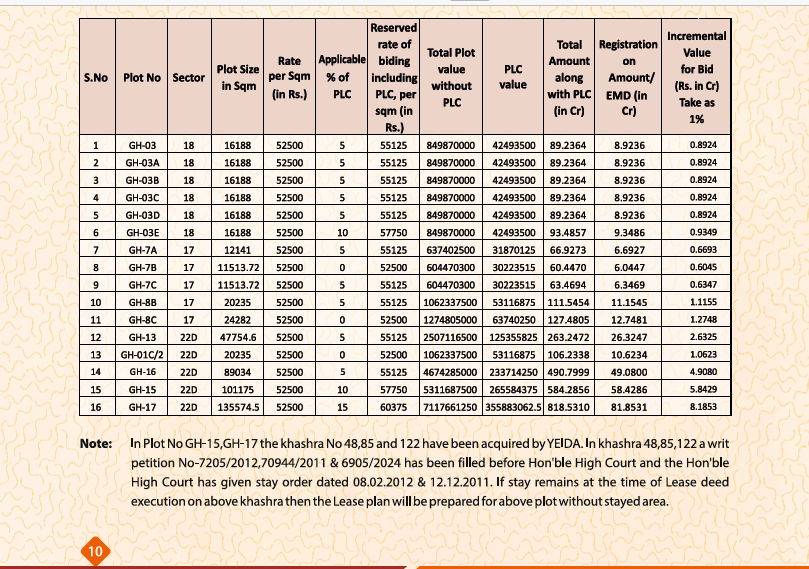
2.Land acquisition cost estimated on basis of Yamuna Authority, YEIDA auction notice of November 2025.
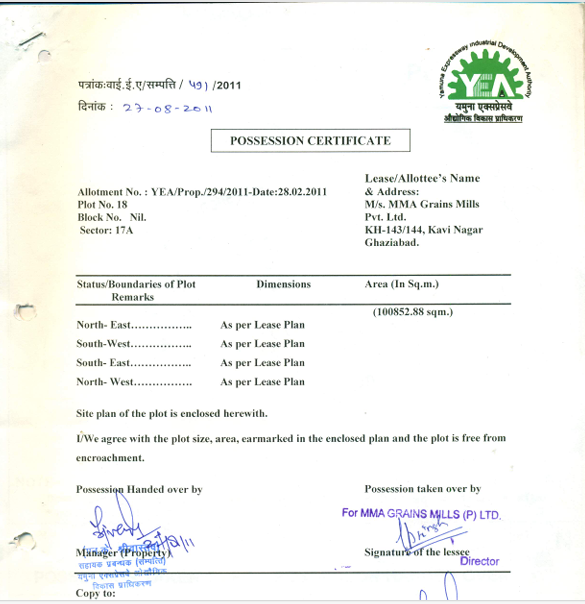
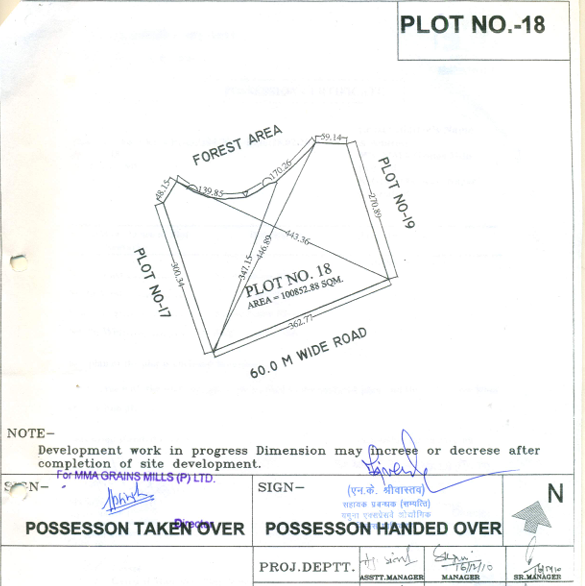
2.Auction Notice Reserve Price copy
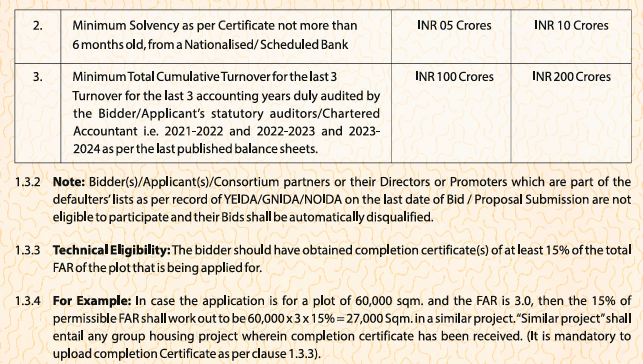
3.Prequalification for application in auction.
Apart from financial qualification challenge for new bidder is track record of completed projects as per pt 1.3.3 given below:
4. LIG/EWS clause is a provision for all new bidders
📊 Quick Table
Category
FAR Reservation
Max Unit Size
Notes
EWS
10%
30 sq. m.
Integrated in project
LIG
10%
60 sq. m.
Integrated in project
This provision ensures that affordable housing is embedded in every group housing project along the Yamuna Expressway, aligning with state housing policy and social equity goals.
Please see details of the EWS/LIG provisions in link below. Page 84-86
============ Forwarded message ============ From: Brij Mohan brijmohan124@gmail.com To : PCB Societycontact@pcb.net.in Cc: peunorthern@gmail.com Date: Mon, 02 Feb 2026 21:28:21 +0530 Subject: Re: Expression of Interest – Upcoming Group Housing Project at Yamuna Expressway ============ Forwarded message ============
Subject: Expression of Interest – Upcoming Group Housing Project at Yamuna Expressway
Dear Sir,
This refers to your communication regarding the proposed group housing project at the Yamuna Expressway, conceptualized for Government, PSU, and institutional sector executives.
We confirm that the project details have been circulated among the office bearers and members of the Petroleum Employees Union–North India. Based on the response received, we hereby convey our Expression of Interest in the proposed Yamuna Expressway housing project on behalf of interested members of the Union, subject to statutory approvals, detailed terms, and final project documentation.
The institutional governance framework, professional project leadership, and quality assurance mechanisms outlined in your proposal align well with the long-term residential and welfare interests of our members.
This Expression of Interest is non-binding and issued to facilitate further engagement and information exchange as the project progresses.
We look forward to further discussions.
Warm regards,
Mr. Brijmohan General Secretary Petroleum Employees Union–North India
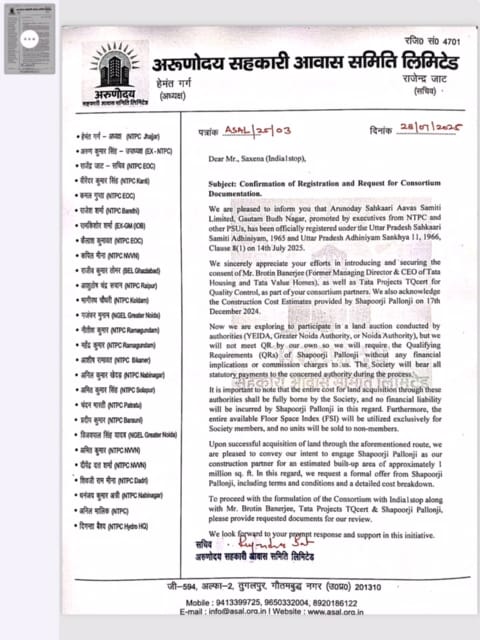
Subject: Invitation to Express Interest in Government/PSU-Led Housing Society Project – Consortium with Brotin Banerjee, TQcert, and Shapoorji Pallonji
Greetings,
Enclosed is the confirmation letter from Arunoday Sahkaari Aavas Samiti Limited (promoted by NTPC and other PSU executives), registered on July 14, 2025, detailing our consortium for a flagship housing project along Noida/Greater Noida/Yamuna Expressway. Led by Mr. Brotin Banerjee (Former MD & CEO, Tata Housing), with project management by Tata Projects TQcert and construction by Shapoorji Pallonji, this initiative targets affordable, high-quality residences near Jewar Airport, with full FSI utilization for members only.
We invite your association/organization to issue a similar letter expressing interest in participating, confirming intent to float and join this project. This will help your colleagues, if they so desire, to join a like-minded government/PSU executives’ society and offer them premium housing at competitive rates.
Severe specialist shortage: Shortfall of ~1,139 doctors (only 2,042 serving vs. 3,181 needed)
High NCD burden: 83% of deaths; diabetes (10-12%), hypertension (20-25%), CVD leading cause
Mental health crisis and medicine shortages (218 essential drugs)
Rural-urban access barriers and doctor migration post-economic crisis
Overloaded system with no new clinics, impacting emergency response
Key Concern: When patients seek specialist care abroad, local healthcare professionals lose both patients and income.
Proposed Solution
Collaborative Care: Facilitating seamless tele-consultations between Indian super-specialists and local doctors, nurses, midwives, and Ayurveda practitioners.
Local Leadership: Ensuring local professionals remain the primary caregivers, maintaining clinical oversight and the patient relationship.
Sustainable Income: Creating a new revenue stream through direct income generation per consultation and structured follow-up care.
Localized Specialist Care: Providing world-class medical expertise within Sri Lanka, eliminating the need for expensive and exhausting foreign travel.
Practice Expansion: Empowering every medical professional to offer a comprehensive multi-specialty OPD, significantly increasing their practice’s value and revenue potential.
VALUE, REVENUE & IMPLEMENTATION:
Financial & Professional Value to Medical Professionals
Retention of patients who would otherwise travel abroad
Earnings per consultation, case, and follow-up
20–30% increase in patient footfall
Up to 50% reduction in outbound referrals
Implementation Roadmap
Pilot: Colombo, Kandy, Jaffna
Expansion: Galle, Anuradhapura
Integration with NGO, donor & private sector programs
Expected Outcomes
Increased income for Sri Lanka’s medical professionals
Improved access to specialist healthcare
70–80% reduction in patient travel costs
Reduced medical revenue outflow to other countries
Stronger, self-sustaining healthcare institutions
Eighteen Super-Specialists out of 100+ List
1.Dr Neeraj Tulara Consultant Physician, Diabetologist, Cardiologist and Infectious Disease Specialist • MBBS, MD, DNB (Med.), PGDID (Aus) • 23.0 Years Of Experience • Licence No. 2010/10/3078
2.Dr Raman Malik Senior Consultant, Nephrology and Renal Transplant • MBBS (1972) • MD (1981) • 22 years as medical officer and MD physician in the armed forces • DNB (Nephrology) AIIMS New Delhi 1989 and Renal Transplant Physician
3.Dr Vrushni Bhuta Fertility & IVF Specialist Consultant, Reproductive Medicine • MBBS • M.S. (OBSTETRICS AND GYNAECOLOGY) • 10+ Years Of Experience • Assisted Patients in IUI, IVF, ICSI, Frozen Embryo transfers, Oocyte donation and Surrogacy.
4.Dr Rajiv Naik M.B.B.S- Himalayan Institute of Medical Sciences, Dehradun, India (2005) • M.S (General Surgery) – GSVM Medical college, Kanpur, India (2010) • FIAGES – Indian Association of Gastro and Endo Surgeon, India (2015) • FMAS – Maurya Sachkhand Hospital, Agra, India (2013) • Observer Ship in Essential of Laparoscopic Surgery, Metabolic and Bariatric Surgery, at Max Institute of Minimal Access, Metabolic and Bariatric Surgery (Dec 2017)
5.Dr Rajeev Dhir Senior Dermatologist and Cosmetologist with an Armed forces background. MBBS from AFMC(Pune) in 1980 MD in Dermatology from Bangalore university in 1988
10.Dr Swarup Swaraj Pal Sr. Consultant Cardiovascular and Thoracic surgeon M.Ch, CVTS M.S General Surgery
11.Dr Archana Rane Strong focus on musculoskeletal rehabilitation, sports injury management, and post-operative recovery programs specialised training in Ante-natal (ANC) and Post-natal (PNC) care . safe exercise, • posture correction, • recovery strategies during and after pregnancy.
12.Dr Praveen S. Kammar • M.B.B.S, JN Medical College, Belgaum (India)• MD – Internal Medicine DM – Medical Oncology (2005) • M.S General Surgery, JSS Medical College, Mysore (2010) • M.Ch surgical oncology, Tata Memorial Center, (2015) • MRCS from Royal College of London -2018
13.Dr Suhas Aagre • MBBS from Maharashtra University of Health Sciences, Nashik, • MD – Internal Medicine DM – Medical Oncology • DNB (Diplomate of National Board) in General Medicine from J.N.M. Medical College, Raipur, in 2012. • DM in Oncology from B.J Medical College, Ahmedabad, in 2016.
14.Dr Mehul Choksi Consultant Gastroenterologist Vast experience in the field of digestive diseases and advanced therapeutic endoscopy. • residency training in Gastroenterology at the prestigious Christian Medical College, Vellore, • residency training in General Medicine at St. John’s Medical College, Bangalore. • awarded the Peter Cotton Travel Fellowship in Advanced Endoscopy at the Medical University of South Carolina, Charleston, USA
Dr Chinmay Kulkarni Consultant Psychiatrist and Mental Health Rational Emotive Behaviour Therapy • Motivational Interviewing • Hypnotherapy
Dt Avanee Parekh B.H.Sc Dietetics (SNDT University Mumbai) • P.G DMM • Certified Diabetes Care Educator (Denmark) • Certified Exercise Consultant ( Talwalkars Academy) • Member of IDA and ISPEN • 25 years experience with 90 % success rate.
17 Dt Shrishti Thakur PG in Food & Nutrition M Sc (Food & Nutrition) -R D V V University, M.P UG (HS) -R D V V University Backed by 20+ years of expertise in diet & nutrition.
18 Dr. Bansode Jagruta Prasad Consultant paediatrician.
We respectfully submit this proposal for your kind consideration and guidance on the next steps, including possible alignment with the Ministry of Health, public hospitals, or pilot implementation pathways. We enclose two attachments showing benefits to your current government and to Sri Lanka’s Doctors.
We would be honoured to discuss this initiative further at your convenience, including a customised demo or site visit to our Primary Health Centre in Noida.
With highest regards,
Saxena V. M. CEO – India1Stop Business Partner – Tata GloHeal 📞 +91-9990623304 ✉️ saxena.vm@india1stop.com